
Non GamStop Casino Payments — Crypto, E-Wallets & Fast Payouts Guide
 Available in GB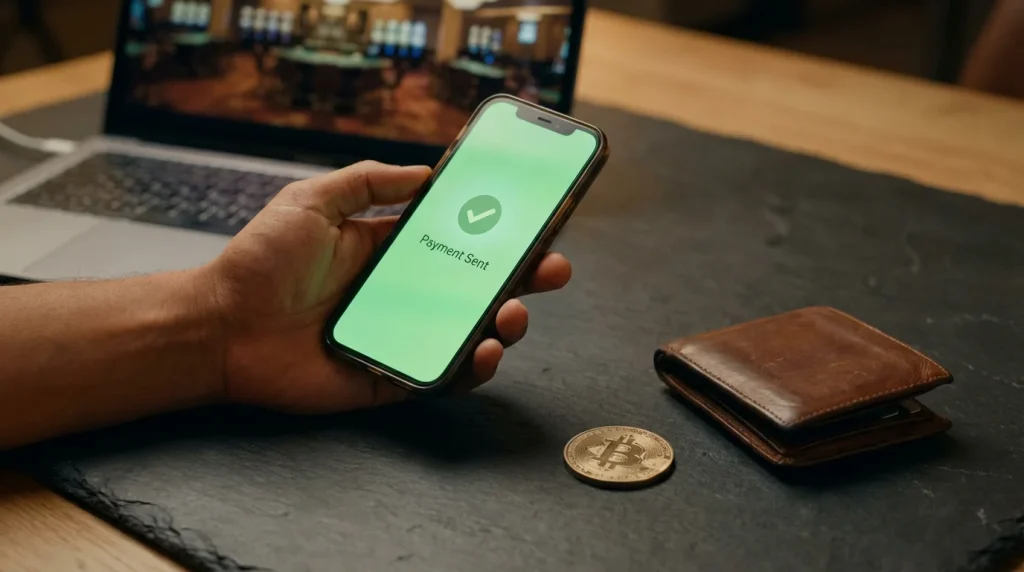
Payment Landscape at Casinos Not on GamStop
At UKGC casinos, your bank decides what you can do. At non-GamStop casinos, the menu’s wider — and so are the risks. The payment infrastructure at offshore casinos differs fundamentally from what UK-licensed operators provide, and those differences affect everything from how quickly you can start playing to whether you can actually retrieve your winnings.
UK-licensed casinos operate under a strict framework. Since April 2020, credit card gambling has been banned for UK consumers. Operators must verify player identities before accepting deposits. Withdrawal processing must follow defined timelines, and payment methods are limited to those approved by the Gambling Commission’s compliance standards. The result is a narrow but relatively safe corridor: you deposit with a debit card or approved e-wallet, your identity is verified, and withdrawals follow a regulated process with defined dispute channels.
Offshore casinos face none of these constraints. They accept cryptocurrency, a payment category that barely exists at UKGC-licensed platforms. They list multiple e-wallet providers, some well-known, others obscure. They may accept credit cards — a method banned for UK gambling transactions at licensed sites. Bank transfers are available for high-value transactions. The diversity is genuine and, for many players, the primary reason they seek out non-GamStop casinos in the first place.
But diversity without regulation creates its own problems. There is no external authority mandating withdrawal timelines. No standardised complaints process for delayed payments. No requirement to segregate player funds from operational capital — a protection that UKGC-licensed operators must provide. When a payment goes smoothly at an offshore casino, the experience can be faster and more flexible than anything available within the UK-licensed market. When it goes wrong, the available recourse is limited to the casino’s own policies and the licensing jurisdiction’s enforcement appetite, which can range from robust to effectively non-existent.
Understanding how each payment method works at non-GamStop casinos — its speed, its costs, its reversibility and its risks — is not optional research. It is the foundation of every deposit decision you will make.
Cryptocurrency Deposits and Withdrawals
Crypto removes the middleman — along with every safety net the middleman provided. Cryptocurrency is the defining payment method of the non-GamStop casino market. It is faster than traditional banking, avoids the card-block issues that plague offshore gambling transactions, and offers a degree of privacy that no fiat payment method can match. It also carries risks that are entirely absent from conventional payment channels, and those risks are non-trivial.
The basic process is straightforward. You hold cryptocurrency in a personal wallet — either a software wallet on your device or an account at an exchange like Coinbase or Kraken. The casino provides a deposit address, which is a unique string of characters tied to your account. You send funds from your wallet to that address. Once the transaction is confirmed on the blockchain — typically within minutes for most coins — the funds appear in your casino balance. Withdrawals reverse the process: you provide your wallet address, the casino sends the crypto, and it arrives after network confirmation.
Bitcoin at Non-GamStop Casinos
Bitcoin remains the most widely accepted cryptocurrency across the offshore casino market. Nearly every non-GamStop casino that accepts crypto supports BTC, and many list it as their primary digital currency option. The network is established, liquid and recognised. Deposit and withdrawal limits for Bitcoin tend to be the highest among crypto options, making it the default choice for larger transactions.
The practical drawbacks are transaction speed and cost. Bitcoin network confirmations can take anywhere from ten minutes to over an hour depending on network congestion, and transaction fees fluctuate with demand. During peak periods, a single Bitcoin transaction might cost several pounds in network fees — acceptable for a large deposit, less so for a £20 test transfer. Some casinos require one confirmation before crediting your account, others require three or more. The wait is minimal compared to bank transfers but noticeable compared to instant payment methods.
Price volatility is the less obvious risk. If you deposit 0.01 BTC when the price is £40,000, your deposit is worth £400. If Bitcoin drops 5% while you play, your remaining balance — even if you haven’t lost a single bet — is worth less in pound terms when you withdraw. The casino doesn’t compensate for this. You are exposed to cryptocurrency market risk on top of gambling risk, and the two compound each other. Players who want crypto’s speed and privacy without the volatility exposure should consider stablecoins instead.
Altcoins: Ethereum, Litecoin, USDT
Ethereum is the second most commonly accepted cryptocurrency at non-GamStop casinos. Transactions confirm faster than Bitcoin — typically under five minutes — and network fees, while variable, are often lower during off-peak periods. Ethereum’s smart contract infrastructure also underpins some provably fair gaming systems, though this applies to a small subset of blockchain-native casinos rather than the broader offshore market.
Litecoin occupies a practical niche. It was designed as a faster, cheaper alternative to Bitcoin for everyday transactions, and it delivers on that promise in the gambling context. Confirmations are quicker, fees are consistently low, and most crypto-accepting casinos support it. For routine deposits and withdrawals where speed and cost matter more than brand recognition, Litecoin is arguably the most efficient option available.
USDT — Tether — is the stablecoin solution to crypto’s volatility problem. Pegged to the US dollar, USDT maintains a roughly constant value, eliminating the currency fluctuation risk that accompanies Bitcoin and Ethereum. You deposit £200 worth of USDT, play for two hours, and withdraw — and the USDT in your wallet is worth approximately the same in pound terms as when you started, minus whatever you lost or won at the tables. The trade-off is that USDT is issued by a centralised entity, which introduces counterparty risk that decentralised coins avoid. For most gambling purposes, however, the stability advantage outweighs the philosophical purity of decentralisation.
E-Wallets: Skrill, Neteller and Alternatives
E-wallets sit in the middle — faster than banks, more familiar than crypto. For players who want the convenience of digital payments without navigating blockchain wallets and exchange accounts, services like Skrill and Neteller remain the most practical bridge between traditional banking and offshore casino play.
Skrill and Neteller, both operated by Paysafe Group, are the two dominant e-wallet brands in the online gambling space. They function as intermediary accounts: you fund your e-wallet from your bank account or card, then use the e-wallet to deposit at the casino. Withdrawals reverse the flow — the casino sends funds to your e-wallet, and you transfer them back to your bank when ready. The intermediary layer serves two purposes. It speeds up transactions, since e-wallet deposits are typically instant, and it insulates your bank account from direct contact with offshore gambling operators — a consideration that matters when UK banks increasingly flag or block gambling-related transactions.
Deposit speeds are the primary advantage. Skrill and Neteller deposits are processed almost instantly at most non-GamStop casinos, getting you into play without the waiting periods associated with bank transfers or even some card transactions. Withdrawals are faster too — most casinos process e-wallet cashouts within 24 hours, and the funds appear in your e-wallet shortly after. Compared to the three-to-seven-day wait for a card or bank withdrawal, this is a material improvement.
The costs are the trade-off. Both Skrill and Neteller charge fees on certain transaction types, including currency conversion, bank withdrawals from the e-wallet, and in some cases deposits to gambling sites. These fees vary by account tier and region, but they can add up for frequent players. A 1% to 2% fee on every deposit, compounded over months of regular play, becomes a meaningful drain on your bankroll — one that is easy to overlook because it does not appear on the casino’s side of the transaction.
There is also a regulatory complication. Skrill and Neteller have, at various points, restricted gambling transactions for users in specific jurisdictions or applied enhanced due diligence to accounts with heavy gambling activity. If your e-wallet account is flagged or limited, you may find yourself unable to deposit or withdraw without completing additional verification steps. This is not a fault of the casino but a consequence of the e-wallet provider’s own compliance obligations, and it can create frustrating delays at the worst possible moment.
Beyond the two market leaders, some non-GamStop casinos accept alternative e-wallets such as ecoPayz (now Payz), MiFinity and Jeton. These services operate on similar principles but with varying fee structures, geographical availability and transaction limits. If you use an offshore casino regularly, comparing e-wallet options — not just casino bonuses — can save more money over time than chasing an extra 50% on a welcome match.
Card Payments and Bank Transfers
Your bank may have its own opinion about where you gamble — and it won’t always agree with yours. Visa and Mastercard are listed as deposit options at a significant number of non-GamStop casinos, but listing a method and reliably processing it are two different things. The gap between the two is where most payment frustration originates in the offshore gambling experience.
UK banks have grown increasingly aggressive in blocking transactions to offshore gambling merchants. Even where the casino accepts Visa or Mastercard and the player initiates the transaction willingly, the issuing bank may decline it. This is not a universal policy — some banks are stricter than others, and enforcement varies by card type, transaction size and even time of day. But the trend is clear: card payments to non-UKGC-licensed gambling operators face a higher rejection rate than almost any other category of online transaction. If you plan to deposit by card at a non-GamStop casino, be prepared for the possibility that your first attempt fails. Having an alternative method ready — an e-wallet or crypto wallet — avoids the scenario where your intended deposit method is blocked and the only option left is one you haven’t researched.
For deposits that do go through, processing is usually instant. The card transaction is authorised in real time, and the funds appear in your casino balance within seconds. Withdrawals to cards are significantly slower. Most non-GamStop casinos quote two to five business days for card withdrawals, though some take longer. The delay is partly processing time on the casino’s end and partly the card network’s own settlement cycle. Weekend and bank holiday transactions extend the timeline further.
Bank transfers are the oldest and least convenient payment method, but they remain relevant for one reason: limits. Players moving large amounts — whether depositing a substantial bankroll or withdrawing a significant win — may find that bank transfer is the only method that accommodates the sum without splitting it across multiple transactions. Deposit times range from one to three business days. Withdrawal times are typically three to seven business days, sometimes longer at less efficient operators. Fees vary: some casinos absorb the transfer cost, others pass it on, and your own bank may charge a receiving fee for international incoming transfers, since most non-GamStop casinos operate from offshore banking jurisdictions.
The practical advice is simple. Cards are convenient if your bank cooperates, unreliable if it doesn’t. Bank transfers are slow but handle volume. Neither method offers the speed of crypto or e-wallets, and both expose your primary banking details to an offshore operator — a consideration worth weighing if privacy matters to you.
Withdrawal Speed Comparison
The casino that pays fast and the casino that pays at all are two different conversations. Withdrawal speed is one of the most frequently cited reasons players choose one non-GamStop casino over another, and the variation across the market is enormous. Some operators process crypto withdrawals within minutes. Others sit on card cashout requests for a week. Knowing the realistic timelines for each method helps you set expectations and, more importantly, helps you identify when a delay crosses the line from normal processing into something worth worrying about.
Cryptocurrency withdrawals are the fastest option available. Bitcoin cashouts typically clear in under an hour once the casino initiates the transaction, though the actual send time depends on the operator’s internal review process. Some casinos batch crypto withdrawals at fixed intervals — every two hours, every six hours — rather than processing them individually. Ethereum and Litecoin are slightly faster on the network side, with confirmations averaging under fifteen minutes. USDT on the Tron network — the most commonly used chain for Tether at gambling sites — confirms in seconds. The bottleneck is almost always the casino’s internal processing, not the blockchain.
E-wallet withdrawals generally arrive within 24 hours of casino-side processing. Skrill and Neteller cashouts are among the fastest fiat options, with many operators completing the transfer within a few hours during business days. The funds then sit in your e-wallet and can be transferred to your bank account, which adds another one to two business days depending on the service and your bank.
Card withdrawals are the slowest conventional method. Processing times range from one to five business days after the casino approves the cashout, and the full cycle from request to funds-in-account can stretch to seven or more business days if the casino has a manual review step or a pending period before processing begins. Some operators impose a 24-to-72-hour “reverse withdrawal” window during which you can cancel the cashout and return the funds to your playable balance — a feature designed to encourage exactly the behaviour it sounds like.
Bank transfers sit at the far end of the timeline. Three to seven business days is the standard quoted range, and international transfers from offshore banking jurisdictions can exceed this. If a casino holds a licence in Curaçao but operates its banking from a different country, the transfer route can involve intermediary banks that add both time and fees.
Several factors slow withdrawals regardless of method. KYC verification is the most common: if you have not submitted identity documents, the casino will hold your withdrawal until verification is complete, which can add days. Large withdrawal amounts often trigger enhanced review, where the casino’s compliance team manually approves the transaction. Weekend and holiday submissions queue until the next business day. And some operators simply process withdrawals slowly because doing so is cheaper operationally and, not incidentally, increases the probability that the player will cancel the cashout and keep playing.
Red Flags in Casino Payments
If the deposit page has ten options and the withdrawal page has two, that tells you everything. Payment infrastructure is one of the most reliable indicators of an offshore casino’s intentions. Operators who are serious about running a legitimate business invest in robust payment systems with multiple methods, transparent processing times and clear fee structures. Operators who are not serious — or worse, actively predatory — show it in how they handle your money.
The first red flag is asymmetric payment options. A casino that offers seven deposit methods but only allows withdrawals via bank transfer is not doing this for technical reasons. It is creating friction to slow your cashouts and increase the likelihood that you continue playing instead. Reputable operators offer withdrawals through the same methods used for deposits, or at least a comparable range of options.
Mandatory deposit-before-withdrawal cycling is another warning sign. Some casinos require you to deposit a minimum amount via a specific method before they will process a withdrawal to that method. This is sometimes framed as a security measure, but its practical effect is to force additional deposits as a condition of accessing your own money. If you deposited via crypto and the casino insists you make a card deposit before they will process a card withdrawal — a method you never used — that is not security. That is a hurdle designed to extract more money from you.
Hidden fees deserve careful scrutiny. Some operators charge withdrawal fees that are not disclosed until the cashout is processed, reducing your payout by a flat amount or percentage that was never mentioned during deposit or play. Others apply currency conversion fees at unfavourable rates, particularly when the casino operates in dollars or euros and converts to sterling on withdrawal. Check the banking or payments section of the terms and conditions before your first deposit. If fees are not clearly listed, ask live support and save the response.
Finally, watch for reversal policies. A casino that allows you to reverse a pending withdrawal — cancelling the cashout and returning the funds to your playable balance — is not offering a convenience feature. It is offering a temptation mechanism that works against your financial interest in every scenario. The best non-GamStop casinos have removed this feature entirely. If a casino still offers it, consider whether the operator’s incentives are aligned with your own.
FAQ
Can I use PayPal at non-GamStop casinos?
PayPal is rarely available at casinos not on GamStop. The company restricts its gambling payment services to operators licensed by regulators it has approved, which overwhelmingly means UKGC, MGA and a handful of other major jurisdictions. Most offshore casinos do not meet PayPal’s licensing requirements, so the option is not offered. If you see a non-GamStop casino claiming to accept PayPal, verify the claim independently — it may apply only to certain regions, or it may not be accurate at all. For similar functionality, Skrill and Neteller are the closest alternatives widely available in the offshore market.
Will my bank block a deposit to a non-GamStop casino?
It depends on your bank. UK banks have the discretion to block transactions they identify as offshore gambling, and several major high-street banks actively do so. The block may apply to card transactions, direct bank transfers or both. There is no definitive list of which banks block which operators, and policies change without notice. If your first deposit attempt is declined, it does not necessarily mean the casino is fraudulent — it may simply mean your bank has flagged the merchant category. Trying an alternative payment method, such as an e-wallet or cryptocurrency, usually resolves the issue.
Are cryptocurrency transactions at offshore casinos reversible?
No. Once a cryptocurrency transaction is confirmed on the blockchain, it cannot be reversed, cancelled or charged back. This applies to both deposits and withdrawals. If you send crypto to the wrong address, or if a casino refuses to honour a withdrawal after you have deposited, there is no payment processor or bank to dispute the transaction through. This irreversibility is one of crypto’s core properties and one of its largest risks in the gambling context. Always double-check wallet addresses before confirming any transaction, and never deposit more than you are prepared to lose — a rule that applies to the payment method as much as it does to the games.
Your Money Moves First — Make Sure You Know Where
Before you deposit your bankroll, deposit £20 and try to get it back. That single test tells you more about a casino’s payment reliability than any review, any forum post or any promotional promise. If the £20 arrives quickly, plays cleanly and withdraws without friction, you have a working payment channel. If it doesn’t, you have saved yourself a much more expensive lesson.
Payment method choice at non-GamStop casinos is not a convenience decision — it is a risk management decision. Crypto is fast and private but irreversible. E-wallets are practical but carry fees and potential account restrictions. Cards are familiar but increasingly blocked by UK banks. Bank transfers are reliable but slow. Every method has a cost structure, a failure mode and a set of conditions under which it works well or badly. Understanding those conditions before you deposit is the single most useful piece of due diligence you can perform.
The best approach is to diversify. Use one method for small test deposits while you evaluate a new casino. Switch to your preferred method once you have confirmed that withdrawals process as advertised. Keep records of every transaction — amounts, dates, methods, confirmation numbers. If a dispute arises, documentation is your strongest asset. And if a casino makes it hard to get your money out, the right response is not to deposit more hoping the next withdrawal will be different. The right response is to leave.
Non GamStop Casino Payments — More on this topic at bestnongstopcasinosuk.
See also Non GamStop Casino Licensing.