Non GamStop Blackjack — Rules, Variants & Where to Play
Best Non GamStop Casino UK 2026
Loading...
Blackjack Rules and Variants at Non-GamStop Casinos
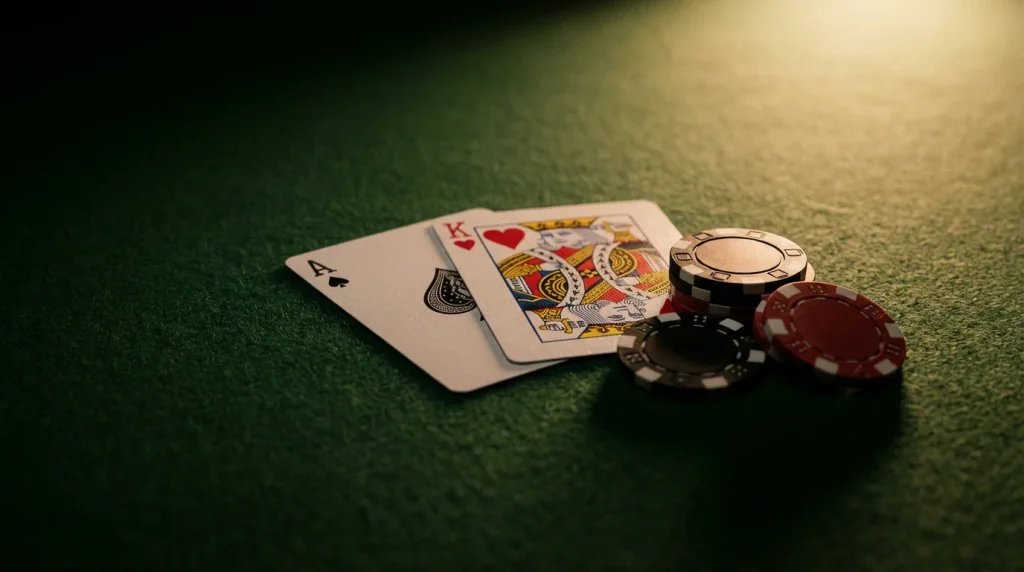
The core rules of blackjack are universal: you are dealt two cards, the dealer receives two cards (one face up), and you decide whether to hit, stand, double down, or split. The goal is to beat the dealer’s hand without exceeding 21. Blackjack — an ace plus a ten-value card — pays 3:2 at standard tables. These fundamentals do not change between UKGC casinos and non-GamStop operators. What changes is the variety of rule sets and variants available under the same roof.
Classic blackjack at non-GamStop casinos typically follows Vegas Strip rules: six or eight decks, dealer stands on soft 17, doubling allowed on any two cards, and splitting up to three times. Some offshore platforms also carry single-deck and double-deck variants, which offer a lower house edge but are increasingly rare at UKGC-licensed operators. European Blackjack — where the dealer does not take a hole card until the player has acted — is common at both domestic and offshore casinos, though it slightly increases the house edge because players cannot know whether the dealer has blackjack before making doubling or splitting decisions.
Multi-hand blackjack lets you play two to five hands simultaneously, increasing your exposure per round without changing the underlying odds. Blackjack Switch — where you are dealt two hands and can swap the top cards between them — is a variant that reduces the house edge to approximately 0.17% with optimal play, making it one of the most player-friendly casino games in existence. Its availability at non-GamStop casinos varies, but it is worth seeking out if the maths matter to you more than the traditional experience.
Live Dealer Blackjack Offshore
Live blackjack is the most popular table game category at non-GamStop casinos, and the experience mirrors what you would find at any high-end online casino. Evolution dominates the space with its standard seven-seat tables, unlimited blackjack (all players act on the same hand), and Lightning Blackjack with random multipliers on winning hands. Pragmatic Play Live offers a smaller but solid selection with lower minimum bets, making it accessible to players with modest bankrolls.
The live format introduces natural pacing. A dealer deals approximately 50 to 60 hands per hour, which is significantly slower than RNG blackjack where you control the tempo and can easily play 200 or more hands per hour. This slower pace is protective — fewer hands per hour means less total action, less exposure to the house edge, and a longer session for the same bankroll. It also adds the social element that RNG games lack: you can observe other players’ decisions, interact with the dealer through the chat function, and experience the game as a shared event rather than a solitary algorithm.
Table limits at non-GamStop live blackjack vary widely. Standard tables typically start at £1 to £5 per hand, mid-tier tables at £25 to £50, and VIP rooms at £100 to £10,000 or higher. Some offshore casinos offer exclusive high-roller tables with limits that exceed what most UKGC operators provide. Before sitting down, check the limits — and remember that a table with a £5 minimum and 55 hands per hour represents £275 in action per hour before the house edge is applied.
House Edge and Optimal Play
Blackjack has the lowest house edge of any standard casino game — but only if you play correctly. With optimal basic strategy, the house edge on a standard six-deck game with favourable rules sits between 0.4% and 0.6% (wizardofodds.com). That means for every £100 wagered, you lose between 40p and 60p on average over time. Compare that to roulette at 2.70% or slots at 3% to 6%, and the advantage of blackjack is clear.
Basic strategy is not intuition — it is a mathematically derived set of decisions for every possible combination of your hand and the dealer’s up card. When to hit, when to stand, when to double down, when to split — every scenario has a correct answer that minimises the house edge. Deviating from basic strategy increases the edge, sometimes dramatically. A player who stands on 16 against a dealer’s 7 because it “feels safe” is making a mathematically inferior decision that adds percentage points to the casino’s advantage over thousands of hands.
Basic strategy charts are freely available and legal to use at online casinos — there is no rule against consulting a reference while you play. At non-GamStop casinos, where there is no oversight mandating responsible gambling prompts between hands, the discipline of following a strategy chart is entirely on you. Print one out, keep it beside your screen, and use it for every decision. The house edge at blackjack is remarkably low, but only for players who actually play the mathematically correct game.
Side Bets — Entertainment or Trap
Side bets are optional wagers placed alongside your main blackjack hand. Common examples include Perfect Pairs (betting your first two cards will be a pair), 21+3 (a poker-style combination using your two cards plus the dealer’s up card), and Insurance (betting the dealer has blackjack when showing an ace). They pay higher odds than the main game — Perfect Pairs can pay up to 30:1 — which makes them attractive to players looking for bigger single-hand payouts.
The house edge on side bets is substantially higher than on the main game. Insurance carries a house edge of approximately 7.4% — making it the worst recurring bet on the blackjack table. Perfect Pairs typically runs between 4% and 8% depending on the specific paytable. 21+3 sits around 3.2% to 8.8%. Compare these to the 0.5% edge on the main hand with basic strategy, and the gap is stark. Side bets effectively subsidise the casino’s costs on the main game — they are high-margin products disguised as exciting add-ons.
If you enjoy side bets as entertainment and account for them in your session budget, they add variety to the experience without causing harm. If you treat them as a serious component of your blackjack strategy, they will erode your bankroll at a rate ten to fifteen times higher than the main game. The discipline is simple: side bets are optional. Treat them that way.
The Only Edge You Control
Blackjack is unique among casino games in that your decisions directly affect the house edge. In roulette, the edge is fixed by the wheel. In slots, it is fixed by the RNG. In blackjack, the difference between optimal play and average play can be the difference between a 0.5% and a 2% house edge — a fourfold increase in cost that accumulates over every session.
Learn basic strategy. Use it every hand. Avoid insurance and manage side bets as entertainment, not strategy. Choose tables with favourable rules — dealer stands on soft 17, 3:2 blackjack payout, doubling allowed after splits. And manage your bankroll as if you are playing a game where the edge is small but permanent, because that is exactly what blackjack is. The casino does not need to cheat. It needs you to play enough hands — and with enough mistakes — for the maths to work in its favour. Your edge is not beating the house. Your edge is making the house work harder for every pound it takes.